
COMMON UNIVERSITY ENTRANCE EXAM : B.Ed.
The introduction of the Common University Entrance Test (CUET) aims to facilitate admissions into both undergraduate and postgraduate programs offered by Central and participating Universities for the academic session 2023-24. The implementation of CUET is geared towards creating a unified platform that ensures fairness and equal prospects for candidates across the nation, particularly benefiting those from the NorthEast and underserved regions. Additionally, this initiative enhances the universities’ connectivity with candidates.
By centralizing the admissions process through a single examination, CUET allows candidates to access a diverse array of opportunities and engage in the admission procedures of numerous Central Universities. This endeavor aligns with the objective of widening access and fostering inclusivity in higher education throughout the country.
INTRODUCTION
1.1. About National Testing Agency (NTA)
The Ministry of Education (MoE), Government of India (GoI), has instituted the National Testing Agency (NTA) as an autonomous, independent, and self-sustained premier testing organization under the Societies Registration Act (1860). Its purpose is to conduct efficient, transparent, and internationally standardized tests. These tests serve to evaluate candidates’ competence for admission to esteemed higher education institutions. NTA’s mission is rooted in the enhancement of both equity and quality in education through the development and administration of research-based, valid, reliable, efficient, transparent, and equitable assessments.
Through its endeavors, NTA has established a framework that supports the promotion of teaching by educators, learning by students, and assessment by both parents and institutions. The agency places great emphasis on the values of quality, efficiency, effectiveness, equity, and security in assessments. To uphold these principles, NTA consistently engages with stakeholders, which encompass students, parents, teachers, experts, and partner institutions.
NTA’s objectives encompass several key aspects, including the conduct of streamlined, transparent, and globally standardized tests to evaluate candidates’ readiness for admission. Furthermore, NTA undertakes research to identify gaps within educational, professional, and testing systems, and endeavors to bridge these gaps. Another facet involves the creation and dissemination of information and research related to educational standards and professional development.
Under the aegis of the University Grants Commission (UGC), NTA has been entrusted with the responsibility of orchestrating CUET (PG) 2023 for all Central Universities. This initiative reinforces NTA’s role in providing a fair, standardized, and efficient platform for assessing candidates’ potential and fostering equitable opportunities in higher education.
1.2. About Central Universities (CUs)
Central or Union Universities in India are formed through the enactment of legislation by the Parliament and fall under the jurisdiction of the Department of Higher Education within the Ministry of Education. Typically, universities in India receive recognition from the University Grants Commission (UGC), operating under the authority of the University Grants Commission Act of 1956. Additionally, 15 Professional Councils are established to oversee various aspects of accreditation and coordination within the education sector. In the case of central universities, they are further governed by the Central Universities Act of 2009, which outlines their objectives, authority, governance structure, and other related matters.
1.3. About Common University Entrance Test (CUET (PG) – 2023)
The introduction of the Common University Entrance Test (CUET) PG is aimed at facilitating admissions to both postgraduate programs in Central and affiliated universities for the academic session 2023-24. CUET is designed to offer a unified platform that ensures equal opportunities for candidates throughout the nation, with a particular focus on those from the North-East and remote rural areas. This initiative further enhances the interaction between candidates and universities.
By implementing a singular examination, CUET enables candidates to access a diverse array of opportunities and participate in the admission procedures of numerous Central Universities. This approach promotes broader accessibility and inclusivity in higher education, encompassing a wider spectrum of candidates and regions
EXAMINATION SCHEME
2.1. Mode of Examination
The CUET (PG) 2023 examination mode solely takes place in the Computer Based Test format.
2.2. Medium of Question Paper
CUET (PG) 2023 is set to be held in a bilingual format, encompassing English and Hindi, except for language and Sahitya papers. It’s important to highlight that, with regard to question accuracy in all question papers except for language domains, the English version will be considered definitive. This rule applies except in cases of language and Sahitya papers.
2.3. Structure of Question Papers
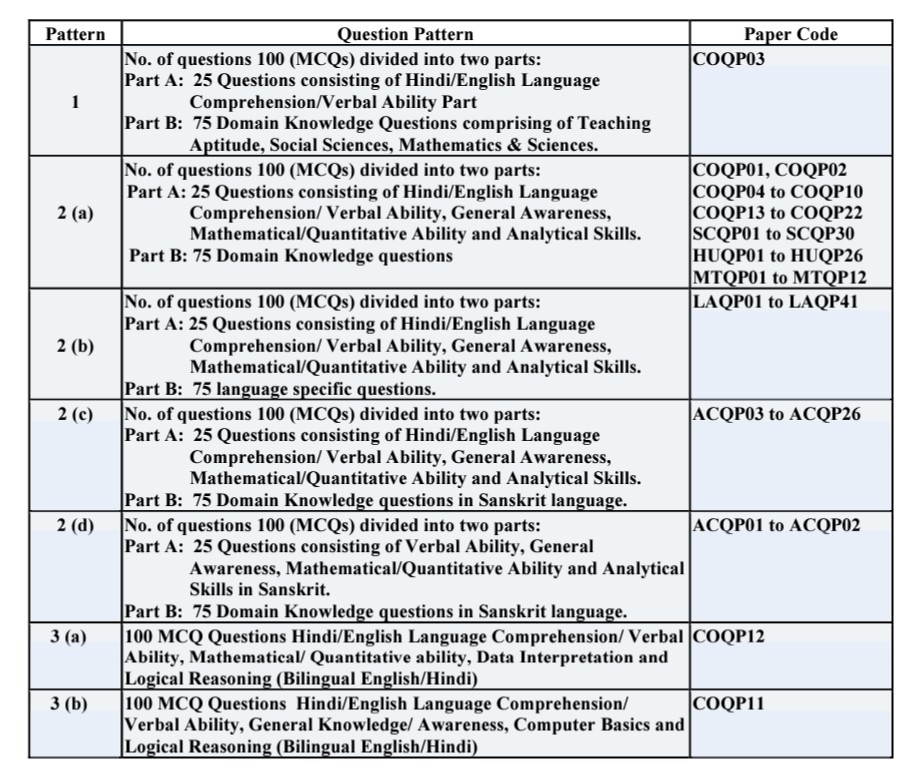
- Candidates are allowed to select a maximum of 20 test paper codes overall.
- Each question paper will consist of 100 multiple-choice questions (MCQs).
- During registration for Part A, candidates must carefully choose between English or Hindi as their preferred language.
- For Shiksha Shastri and Shiksha Acharya courses, the entire question paper of 100 questions will be in the Sanskrit language exclusively.
- Regarding Part B of the Question Paper for Acharya courses, it will be exclusively in Sanskrit, except for Hindu Studies (available in English and Hindi) and Baudha Darshan/Buddhist Studies (offered in English, Hindi, and Sanskrit).
- In the case of language papers, Part B of the Question Paper will be presented in the designated language.
2.4. Marking Scheme
- Each question carries 04 (four) marks. For each correct response, the candidate will get 04 (four) marks.
- For each incorrect response, 01 (one) mark will be deducted from the total score.
- Unanswered/un-attempted responses will be given no marks.
- To answer a question, the candidate needs to choose one option as the correct option.
- However, after the process of Challenges of the Answer Key, in case there are multiple correct options or change in key, only those candidates who have attempted it correctly as per the revised Final Answer Key will be awarded marks.
- In case a Question is dropped due to some technical error, full marks shall be given to all the candidates irrespective of the fact who have attempted it or not

SYLLABUS OF CUET(PG) : B.Ed.
The entrance syllabus for Question papers available on NTA Website https://cuet.nta.nic.in
COQP03

COQP04

COQP05
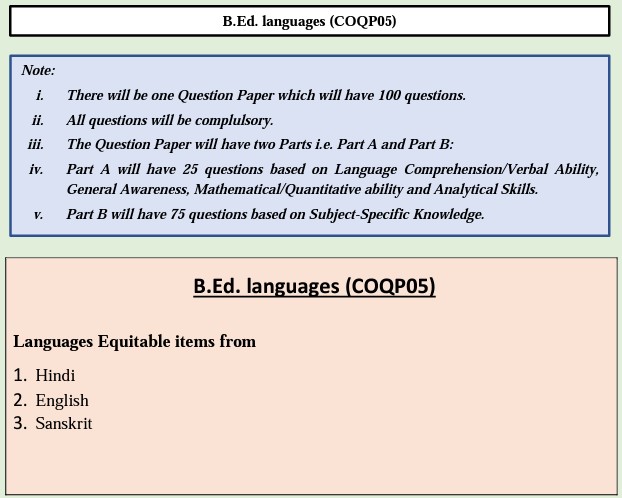
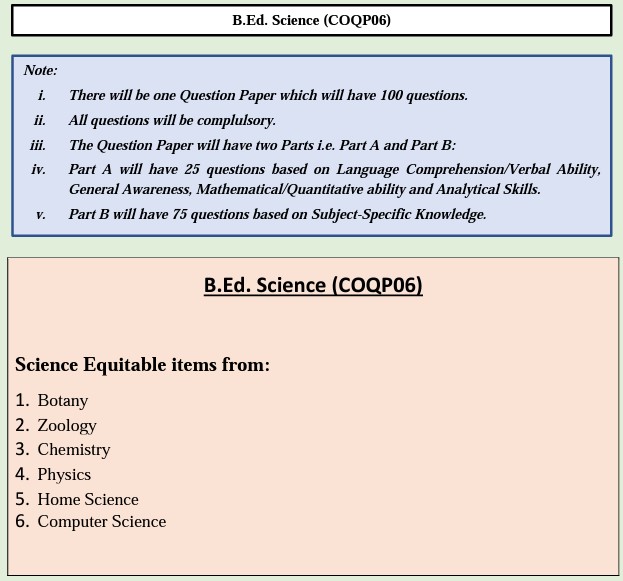
COQP06
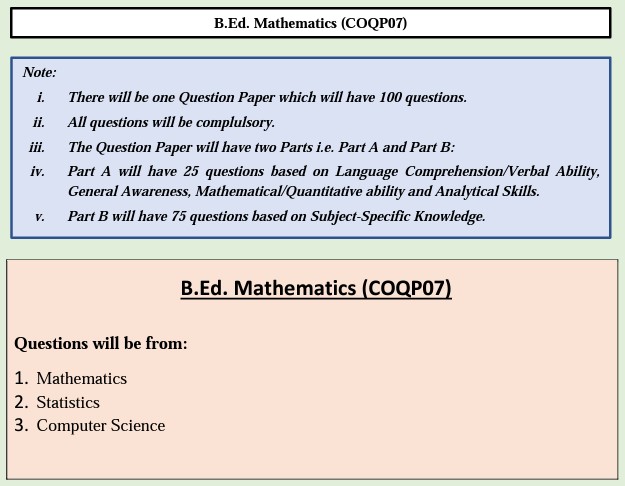
COQP07
ELIGIBILITY AND QUALIFICATION
3.1. Age Limit
When applying for CUET (PG) 2023, candidates face no age restrictions. Those who have completed their bachelor’s degree or its equivalent, or are scheduled to complete it in 2023, are eligible for the CUET (PG) 2023 exam, regardless of their age. Nevertheless, candidates must meet the specific age criteria set by the University to which they intend to seek admission.
LIST OF B.Ed QUESTION PAPER WITH COURSES

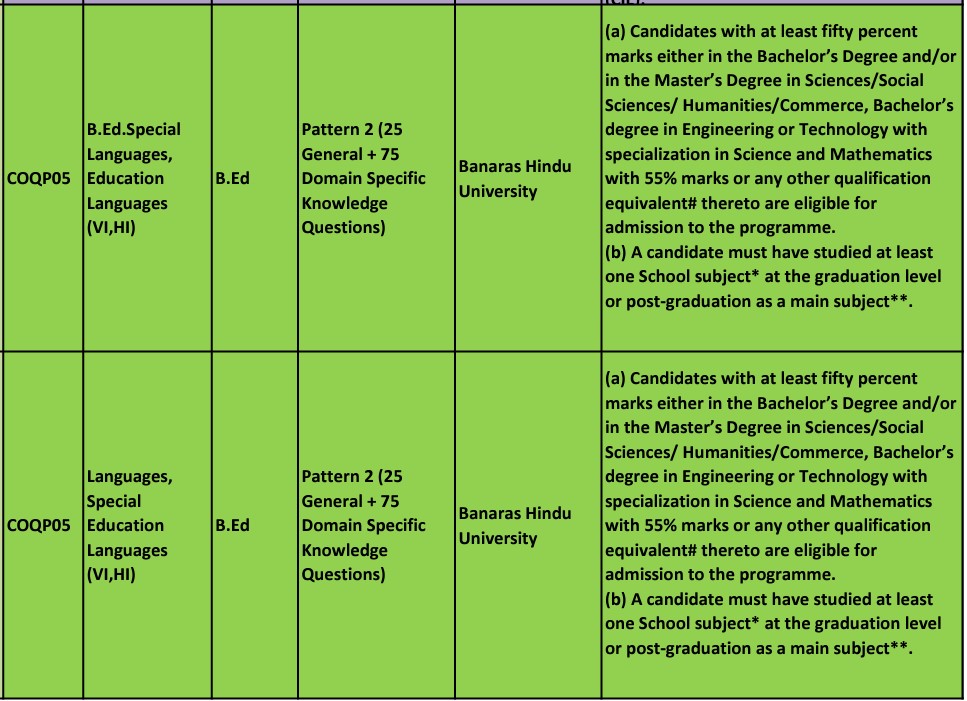
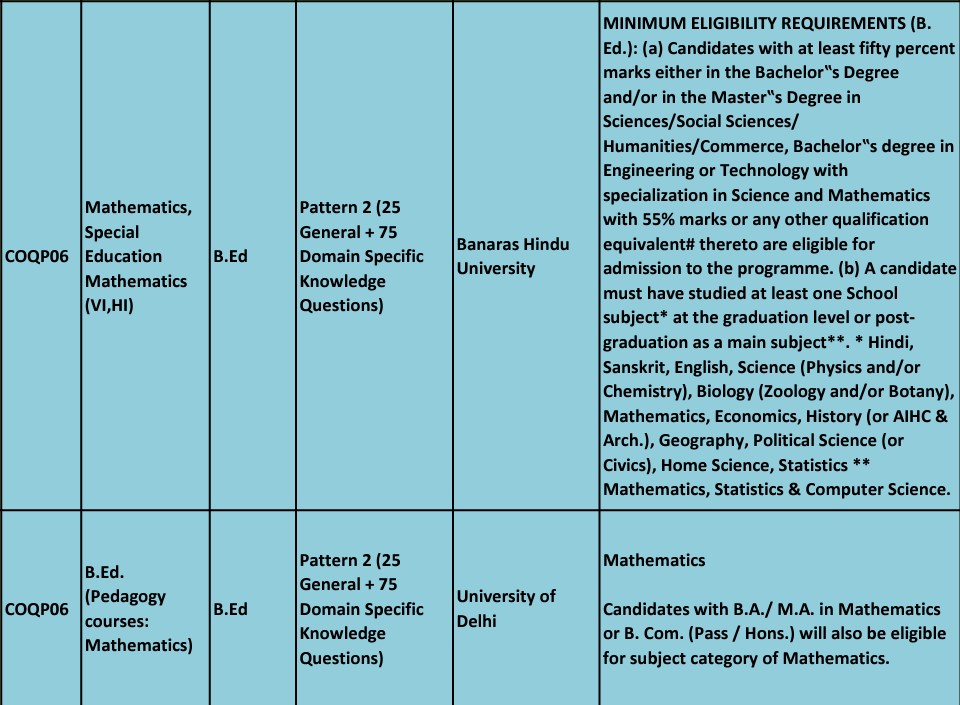
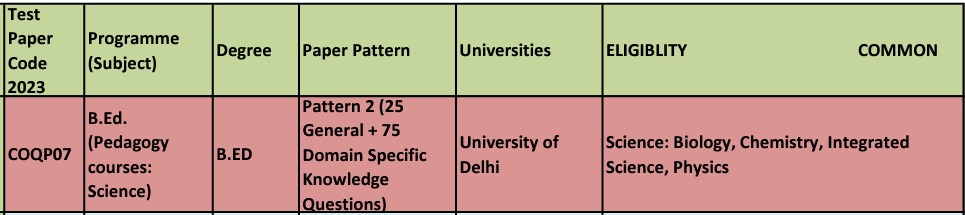
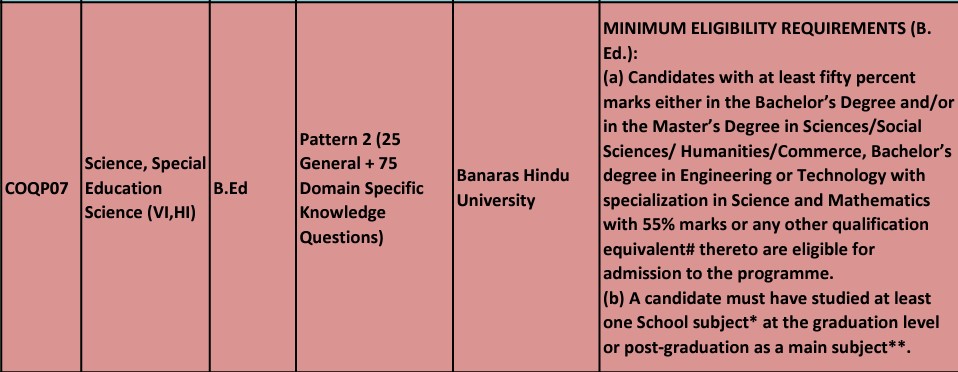
PAPER PATTERN FOR DIFFERENT B.Ed CODES
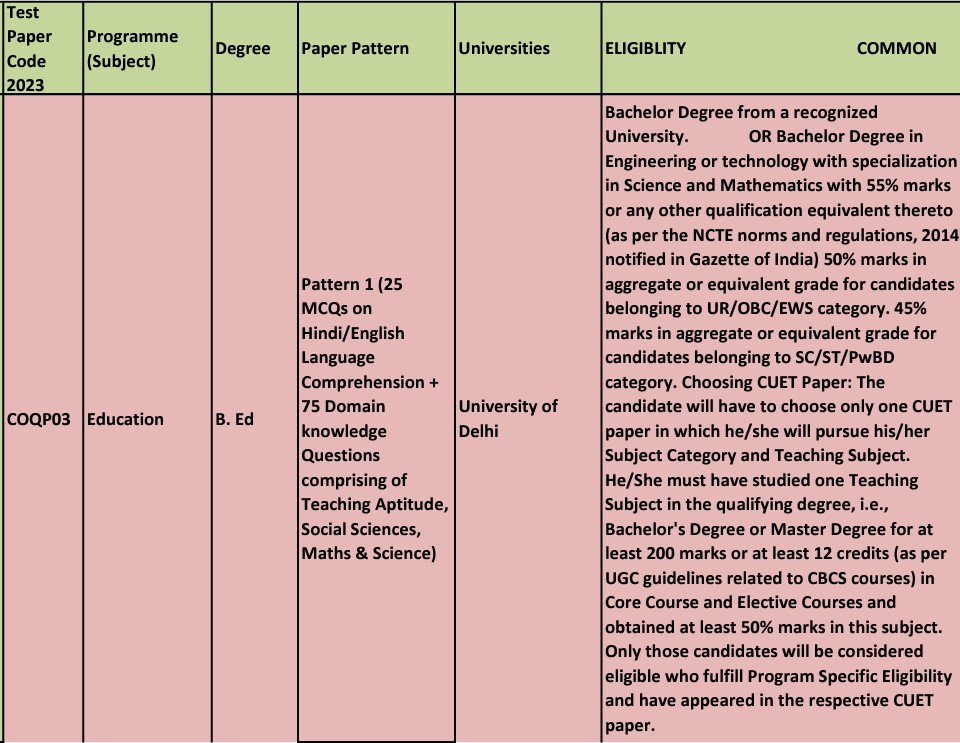
COQP03
COQP04

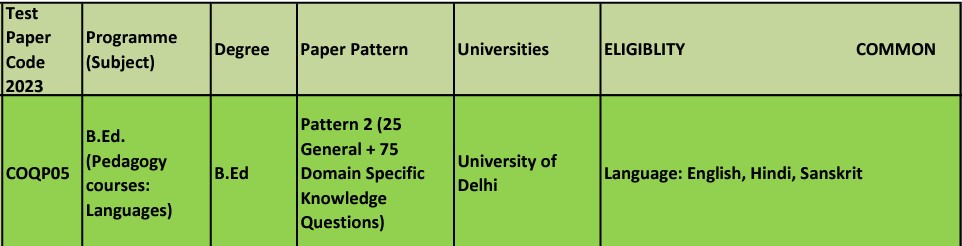
COQP05
COQP06
COQP07
For Complete information regarding the different paper codes along with the information about different A central university, one can refer to the below pdf.
CONCLUSION
The CUET PG B.Ed. examination opens the door to a diverse range of candidates aspiring to further their education and expertise in the field of education. With no age limitations, the exam welcomes individuals from various walks of life who have completed their bachelor’s degree or its equivalent. This inclusive approach underscores the commitment of the university to provide educational opportunities to a wide spectrum of learners. As candidates prepare for the CUET PG B.Ed. exam, they not only demonstrate their dedication to personal and professional growth but also contribute to the advancement of the educational landscape. This examination stands as a testament to the university’s vision of fostering excellence and innovation in education, shaping individuals into qualified educators who will make meaningful contributions to the future of teaching and learning.
TO BOOST YOUR PERFORMANCE AND STAY UPDATED REGARDING ANY TEACHER EDUCATION, EXAMS AND JOB-RELATED INFORMATION JOIN DELHI BYTES ON THE FOLLOWING PLATFORMS: